

THE GREAT AI DISRUPTION
HOW TO MANAGE in the AGE OF AI
A STRATEGIC ROADMAP

INTRODUCTION
AI is remaking the entire global economy, and in doing so it is causing economic disruptions that will most likely turn out to be similar in scale to the Industrial Revolution. In other words, we’re going through a total re-do, or as our title suggests, “The Great AI Disruption.”
But whereas the Industrial Revolution unfolded gradually and took more than a century and a half to reach maturity, the AI Revolution is unfolding abruptly, over a mere decade. From 2022 to 2032 the world economy is being entirely reshaped, a speed that is unprecedented. Also unprecedented is the potential scale of the disruptive consequences and implications.
This presents a huge set of huge challenges for CEOs, managers, and leaders. The purpose of this report is to summarize these challenges, and to provide a you set of tools to help you prepare for what’s coming.
We are certainly aware that you already know a lot about AI and its current and potential impact. But because the field is evolving so quickly and there are so many new developments to consider, for our own purposes we have found it necessary to prepare a major revision of our strategic roadmap every few months. This report is the fourth version we’ve done in just the last 18 months. Thinking it through has been helpful for us, and we hope you also find it useful. We welcome your feedback.
PART 1:
THE IMPACT OF AI on GEOPOLITICS and ECONOMICS
Humanity is a tool-making species, as the capabilities of our tools throughout all of history have literally defined what we can do. As tools have therefore shaped our lives, to a very great extent they have also shaped our culture, our institutions, and even our expectations.
Now with AI we have a tool such as we’ve never had before. For the first time in history we are able to outsource brainpower. As these AI tools are becoming as smart as us, and are soon to be smarter, this new capability is transformative, revolutionary, and highly disruptive.
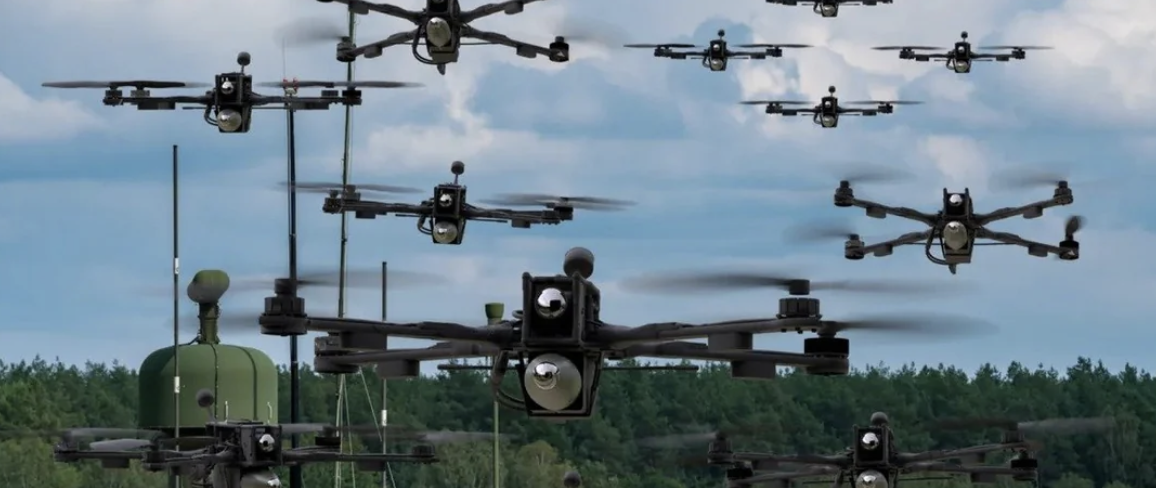
A bitter example is found on the battlefields of Ukraine, where AI has totally changed how war is fought. AI-enabled weapons now search for, find, and attack targets on their own, without human intervention. Indeed, the Ukrainian army recently won a battle in which its warfighters were all automatons. We have thus arrived at robotic warfighting, formerly a subject of science fiction, now a matter of fact.
A sweeter example is found in all fields of science, where AI is enabling new discoveries at a profound rate. AI, for example, won the Nobel Prize for Chemistry in 2024 by doing intellectual work that was beyond the capacity of humans. It’s true that humans were given the golden medals to wear around their necks, but their work simply could not have been done without the pattern recognition skills of AI.
The consequences of this, both for good and for bad, are inescapable across all aspects of society. For example, leadership in AI technology literally provides decisive geopolitical advantage, so AI is now at the center of the global arms race. The pressure to continue developing this technology for military purposes will therefore only intensify, and as a result there simply isn’t going to be much in the way of brakes on AI’s development, because the risks to nations of being left behind are so great.
The old line that “necessity is the mother of invention” has been shown once again to be absolutely true. Put simply, Ukraine itself would no longer exist as an independent nation were it not for its proficiency in innovation. From the initial defensive innovations on the road to Kyiv in 2022 to the automaton battles now being fought on the eastern front, the cycle time from concept to implementation has been compressed to days. Ukraine is now so far advanced in the development of AI and drone technology that as of April 2026 they sell both weapons and expertise to multiple nations in the Gulf region, which seek these newly-essential capabilities to defend themselves from Iranian drone and missile attacks. Warfighting is evolving in real time, as Russia’s invasion has inadvertently accelerated the development of new technologies for war, and also forced Ukraine to become a new leader in global armaments manufacturing.
The historical pattern of investment in the development of new military capabilities has been a driver of war fighting since long before the Roman Empire, and even then the consequences spread almost immediately to commerce and economics. And it is precisely because AI’s capabilities will continue to have such massive impact on business as well as on war that the huge concentration of investment in AI is now a defining feature of global economics.
Yet because such a small number of firms are the leaders in AI, an exceptional concentration of economic power and importance is now in a very few hands. This creates an element of significant concentration risk for investors, and vulnerability for entire markets. The global economy is thus confronted with a challenge that, ironically, no prudent investor would choose for their own portfolio.
The details look like this: as of May 28, 2026, the aggregate market value of Nvidia, Microsoft, Google (Alphabet), Meta, and Amazon is approximately $14.22 trillion. The total market capitalization of all U.S.-listed public equities is estimated at $75.04 trillion, so these five companies alone constitute about 19% of the entire U.S. stock market equity. To put their massive scale and space-altering gravity into perspective, these five giants hold a larger combined equity value than the entire public stock markets of China and Japan, combined.
Three more companies, SpaceX, OpenAI, and Anthropic, are all planning to soon join the five as public companies, and if together these “Elite AI Eight” do as well as they hope, and they create significant profits and handsome returns on the massive investments they’re making in AI, then the stock market will continue to shine. SpaceX is by itself planning the largest IPO in history, and its business model has pivoted from rocketry, at which it has demonstrated technical superiority, to providing space-based infrastructure for the AI economy, which is clearly a hugely risky proposition. This pivot constitutes a massive bet on the future shape of the AI-enabled economy.
And what exactly will AI mean for the economy? The downside possibility is that if these companies do indeed achieve a significant level of profitability that justifies their enormous valuations, this will also probably mean that AI has displaced of millions of jobs, which would of course create significant hardships for the displaced, and a major drag on the economy as a whole. That is, the success of the Elite AI Eight will signify the emergence of an entirely new, AI-dependent economic structure.
As patterns of employment will be fundamentally changed through major job losses, enormous social pressures will arise which would inevitably have major political consequences. The structure of government taxation would have to change since employment taxes would evaporate, while the demand for support for the unemployed would significantly increase. Less revenues but greater costs will squeeze society very hard.
We might suppose that faced with these challenges, governments would try to limit the development and use of AI. Yet because the geopolitical and military risk of being left behind in the AI arms race is so great, the likelihood of meaningful regulatory restraints is very low.
Consequently, the upside scenario for the leading AI companies constitutes in many ways a massively downside scenario for society.
Conversely, if it’s a bust and it turns out that these companies cannot achieve returns commensurate with the billions they’re investing in AI, then the failure of their investments will inevitably cause a recession, if not worse. Even just a small glitch in the profitable operations of a few of these highly valued firms could wipe out billions or trillions of equity, which could also lead to a recession.
Hence, one major macro-economic possibility is a concentration of profitability and continuing stock market growth for a tiny number of firms, but their very success also leads straight to the possibility of a “jobs apocalypse” (in the words of a recent Economist cover story). And the other is a recession that results from the failure of investment in AI to generate a sufficient return.
Is there a third possibility? Perhaps job creation will balance out job losses. But is that a fantasy or a realistic possibility? As of now, no one knows. So again, the word “disruption” is hardly adequate to describe what’s coming.
All this means that the practices of management have to change, and radically, in order to keep up. Firms are faced with massive disruptions and also tantalizing opportunities, and dealing successfully with these conditions will likely be the greatest career challenge that most managers have ever faced. Or in the tart words of a leading Wall Street banker, “It’s a s***load more complicated than it’s ever been.”
Is it a 3D chess match?

The report goes on to provide the roadmap that explains what’s happening throughout the economy, and then in Part 2 it offers a detailed management guidebook to help you assess these changes and deploy the right initiatives for your own organization.
All these insights, including the analysis of what’s happening and the assessment tools you need to plan a sustainable future for your organization, are among the key topics we often cover in our keynote talks and workshops, all created to help organizations accelerate the design and deployment of effective responses.
THE ROADMAP: WHAT WILL HAPPEN
Given the massive system-level changes that are happening, it’s essential for leaders to work out how all this will unfold. Here are some of the details:
Knowledge in and skill with AI have become fundamental to all types of economic activity, and a clear dividing line will soon exist between those with and those without AI expertise. This divide will intensify disparities of opportunity, meaning that investment in AI expertise is now mandatory.
As AI significantly changes how work is done, the relationship between labor and capital is necessarily shifting. The pressure will be on labor, and the likelihood of mass unemployment looms threateningly. If that were to happen, social unrest would be inevitable, leading also to political upheaval.
The same logic applies not just to individuals and companies, but to entire nations. As noted above, in the future national competitiveness (or in the case of the EU, regional competitiveness) will largely depend on the level of proficiency in AI. Since this is now obvious to everyone, the race is on to develop ever-more-powerful AI tools. The pressure is relentless, so notions of prudence and governance are shoved aside in the breakneck quest to get or stay ahead. Continued development of AI technology is, in other words, a runaway train.
AI changes the structure of employment, as massive job losses are looming, while new jobs are also emerging. Whether these two balance out is one of the biggest unknowns, but even if they balance at the macro level, they will certainly not balance at the level of individual firms and industries. Consequently, there will be winners and big losers.
AI agents will soon transact business autonomously, a shift that will alter the very nature of trade. As with all such shifts, there will be winners and losers.
Taken together we see that the global economic infrastructure is being entirely reconfigured around AI. Massive data centers, growing demands for electric power, and huge investments in computer chips are among the most prominent macro-scale consequences.
COMPETITIVE SHIFT
The nature and character of the marketplace is also shifting quickly. The AI-driven changes at the macro-economic scale are altering the competitive structure of entire industries, which in turn has fundamental implications for how you manage your company. There are now massive financial and workforce demands on individual firms, such as the need to upgrade networks, enhance cyber security, buy AI tool licenses, develop and deploy AI agents, recruit AI staff, develop the AI capabilities of existing staff, and manage all this change.
AI capability is now a requirement for success in every industry. Essentially everyone in the firm needs to become proficient in AI, and it’s evident that organizations that effectively scale their use of AI earliest will likely gain significant advantage, while conversely the laggards will suffer.
Both the work itself and the workforce will therefore have to be redesigned, which is no trivial problem in itself.
At an operational level, the usefulness of AI depends on these four factors:
Technical infrastructure, including networks, data centers, processing capabilities, etc.
The training of LLMs and agents.
The skills of the people deploying AI.
And the data that AI tools use.
All will have to be optimized. But as optimization is a dynamic challenge rather than a static one, what constitutes optimal today could be massively inadequate tomorrow. Optimization will therefore be a moving target, and the cost to keep up will most likely grow.
Consumer desires, needs, and expectations will change, as people are able to access knowledge and information in new ways, and at unprecedented speeds. Therefore, the core value proposition in most industries will shift, in some case radically. The premium on adaptation will be accentuated. This means that the core business model in many industries will shift, in many cases radically. Firms that realize this first may survive or thrive, while again, the laggards will soon come to regret their procrastination.
SUMMARY: ACCELERATION
With AI we now outsource brainpower to machines, so AI thus changes how we think and even what we think about, because it enables us to address problems we’ve never been able to solve. Hence it changes the very nature of “work, which” means that “employment” is also changing.
The global economy is therefore pivoting rapidly through a concentrated wave of massive investment, now becoming AI-centric. Technological and economic power is being concentrated into fewer hands, creating new forms of systemic risk. While the end point of all this is unknown, it’s easy to speculate on what super-intelligent AI may be capable of, and how much more massively disruptive it can become.
Meanwhile, both at the macro level of the economy and the micro level of industries and individual firms, the process of change is now being driven ever faster because of the intense competition between the core AI companies and their national patrons. With the brakes now removed, change will continue to accelerate, and shifts that used to occur over years will soon happen over months, and then weeks.
COMING SOON IN PART 2:
WHAT TO DO: A MANAGEMENT GUIDEBOOK
With all that in mind, the next question that inevitably arises is …
What are you, as a CEO, manager, or leader, going to do about all this?
You definitely need new skills.
You absolutely need new tools.
And you desperately need an action plan.
The action plan is the subject coming soon in Part 2.