

Is your organization ready for AI?
If not, it ought to be a priority.

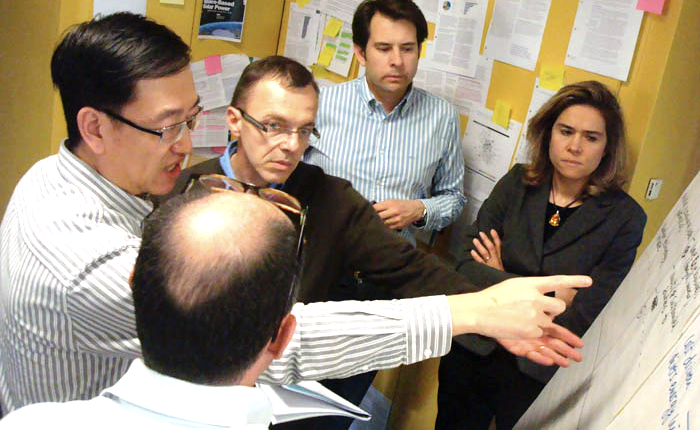
But how to go about it? Last week we led a two-day readiness workshop for a major US national health care provider, a firm with $100 billion+ in annual revenue.
The purpose of the workshop was to help the IT project management organization think through how they do many of the tasks they use to manage the more than $1 billion of annual IT project spending. (Gasp!) Including optimizing how they use AI.
Of course they’re already using AI for just about everything – they even used it to help draft the contract for our consulting project. But right now their use is pretty random, and to be truly AI-ready they know that they’ll have to get much more systematic about it.
Our job was to help a team of fifty IT project managers to think it all through in detail.
One of the tools we used to help them is a handy little matrix devised by Sami J. Karam and our friend Richard Sprague, and which is described in their helpful book The Human Exception. And we work it out on paper.
The matrix simply invites us to think through what humans are exceptionally good at, and what we’re not, and what AI is good at, and what it’s not. Formatting this as a 2x2 proved to be exceptionally helpful.
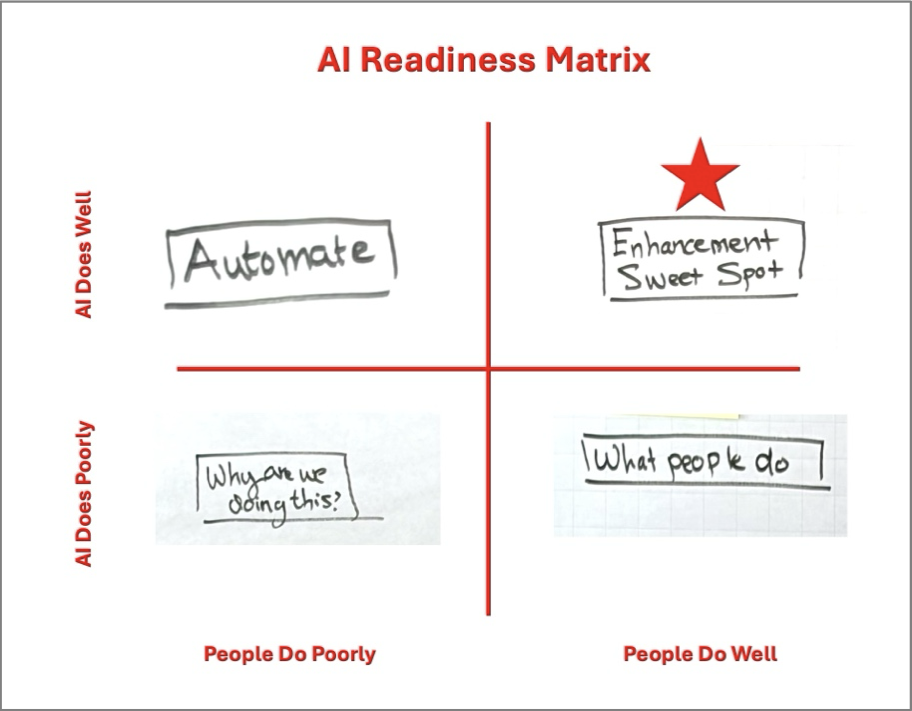
The upper right quadrant is where humans and AI excel, so it is the collaboration and enhancement sweet spot. The idea is that the real power of AI comes forth when we optimize work by bringing together the capacities of brains and LLMs.
The lower right is what only people can do.
The lower left is where neither AI nor humans are good, so it’s labeled, “Why are we doing this?” Shouldn’t we just stop doing this stuff?
And the upper left is what needs to be automated, what AI can pretty much take over.
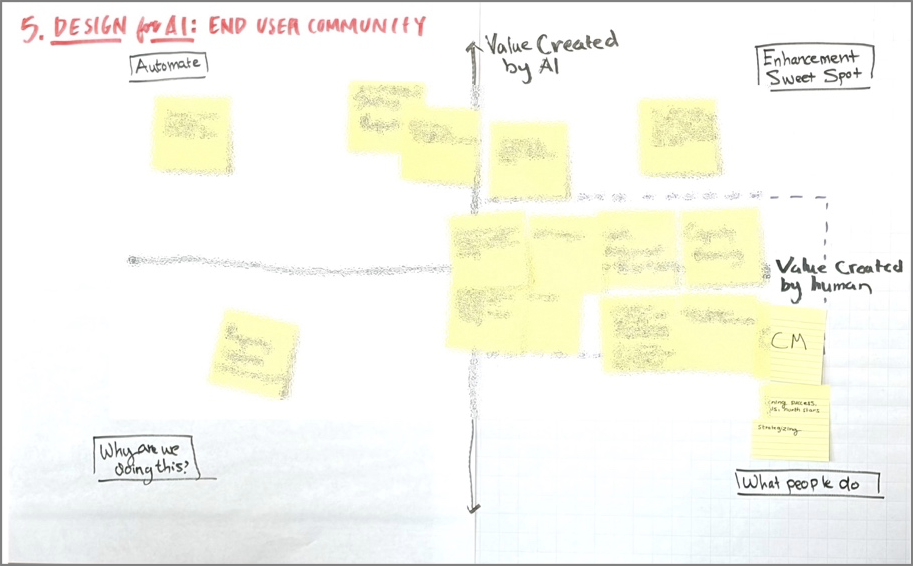
The image above shows 16 key functions they wrote on their the flip charts. (We blurred the center of the image.)
Of course you could tell any old average AI tool create this matrix for you, but then what you’d get is an artifact. Blah.
When a team of people create it, using the ancient technology of paper and pen, what you get is a collaborative conversation that exposes assumptions, ideas, and possibilities, and sets the stage for meaningful adoption. Aha!
Indeed, we were very happy to hear that at the end of the workshop, one of the IT leaders told us that this was the best workshop she’d ever participated in. In rough terms, we estimate that we accomplished about 90 days of work in two, so a very efficient use of time, that will significantly accelerate progress on key issues.
Hence, we see that the human conversation, properly facilitated, becomes an essential tool on the road to successful AI adoption.
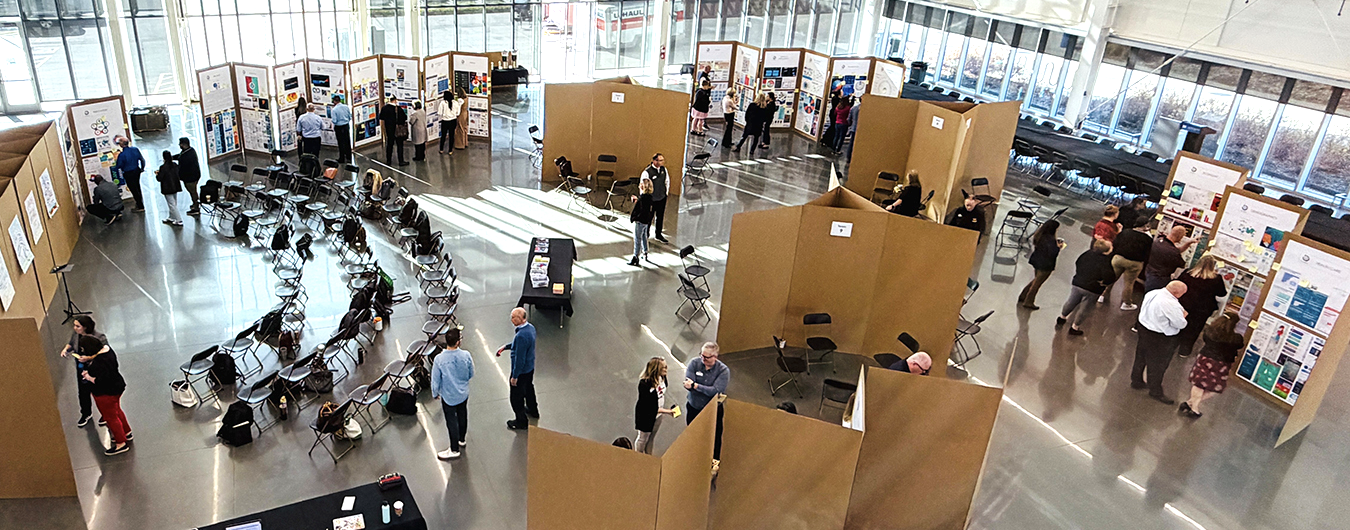
As this photo of the work environment shows, the technologies we’re using to accomplish this in the workshop setting aren’t high tech. It’s just large display boards, post-it notes, markers, flip charts – and most importantly, people, working together to solve complexity.
There’s a lot more to AI readiness than a two-day workshop, but if we skip ahead to vendor selection and tool definition, we miss out on the critical processes of people thinking about the work they do, and how they can improve it. This becomes the foundation, upon which they can then very quickly build, progress, and benefit from what AI can bring.
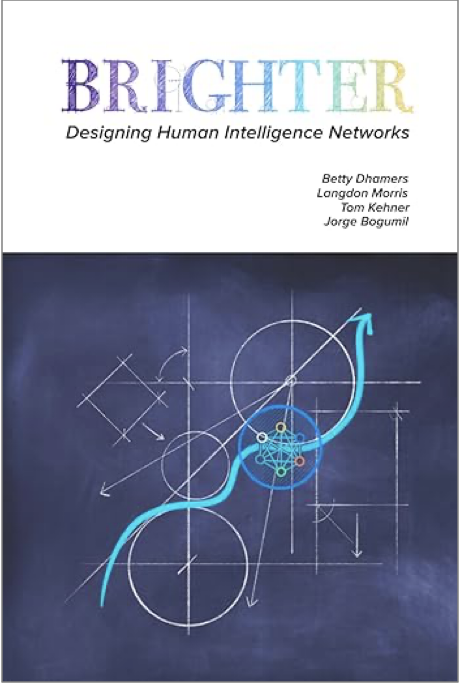
And by the way, all of this is exactly the subject of our newest book, Brighter. The team of authors has been helping organizations like Airbus, Doctors Without Borders, UNICEF, the US Air Force and TotalEnergies to solve immensely complex business problems for decades now. Lead author Betty Dhamers and co-authors Langdon Morris and Tom Kehner are all super-experienced at this, and designer Jorge Bogumil has produced a beautiful book that’s filled with crystal clear graphics, and many useful case studies. You can get a copy in paperback or hardback at Amazon, and if helping people solve complex problems is part of your role, then you may find the book very useful.
During the past year we’ve worked with a more than a dozen companies and governments to support them in getting ready for the AI future, with keynote talks, workshops, trainings, and through our three AI-focused books. Can we help you?
We’d be happy to help your organization to get AI-ready, too!
Contact Langdon, and let’s talk.
Up Next
Langdon will be giving the keynote talk at the INCOSE Health Care Working Group conference in April, where he will talk about the Future of AI and what it means for health care organizations.
Seize the Future
We’re now in the planning stage with the leaders of Eastern Cape, South Africa to conduct a week-long series of workshops and trainings to help shape the future of the entire region. We call it Seize the Future.
The region’s industries are suffering, youth unemployment is high, and AI is coming.
The plan is to combine human planning and interaction in face-to-face dialog, with the use of our Crucible AI tool to help define and then solve for complexity. During the day the people will work through problem definition and solution scoping, and overnight we’ll use Crucible to devise possible solutions, which the people will then review and revise the following day.
In this way we will apply the lessons of the AI Readiness Matrix so humans can do what humans do best, and AI can contribute what it does best, and all in an accelerated time frame.
Our expectation is that we will achieve six to nine months of planning progress, in a mere five days.