How to Solve Tough Problems In the Age of AI
The Transformation of Management Consulting
InnovationLabs Newsletter, January 2026
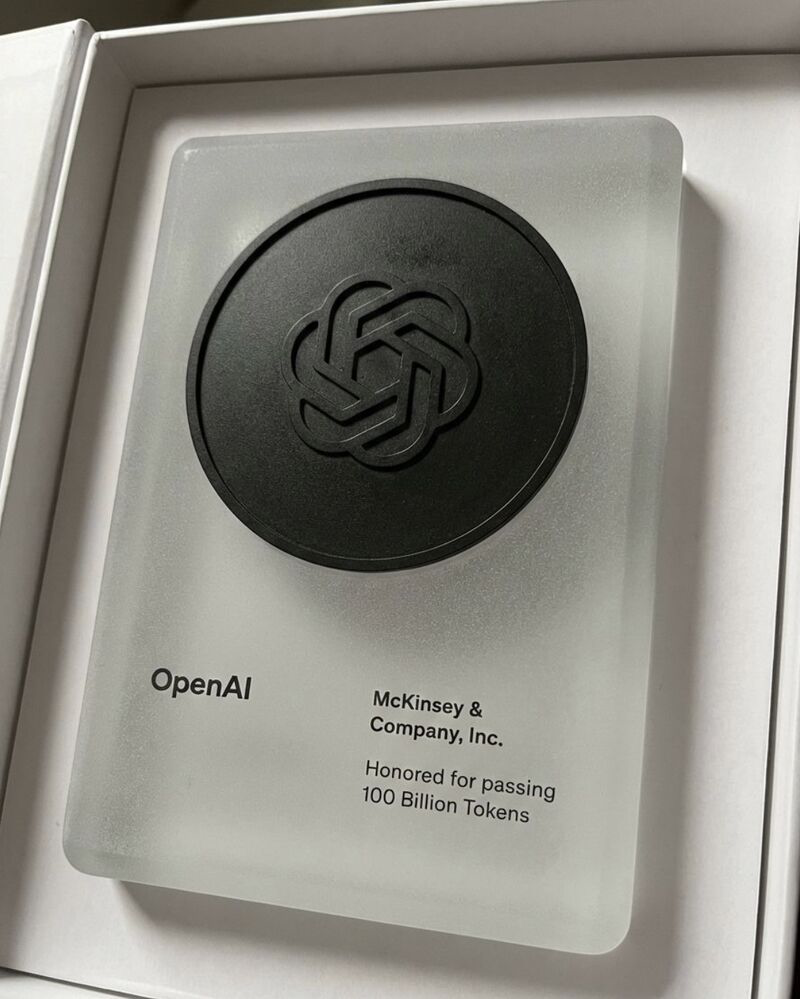
It was recently reported that McKinsey & Company received a nice plaque from OpenAI after they had passed 100 billion AI tokens.
The LinkedIn post about this has generated some very interesting comments, ranging from “management consulting is dead” to “you hire McKinsey for lots of things, not just strategic ideas, and anyway no one ever got fired for hiring McKinsey.”
We also have a point of view on this, because for the last six months we’ve been incubating an AI tool we call “Crucible.” Crucible is an advanced agentic AI system that uses the principle of dialectics to derive robust solutions to complex problems. It consists of 22 distinct AI agents, each of which has a specific analytical role.
Once Crucible is given a detailed prompt and any relevant background information, it works through a disciplined sequence of inquiries that constitute all the best-known practices in strategy design. Various agents analyze, brainstorm, ideate, self-critique, revise, and ultimately derive a tested and validated solution that is fully documented. They develop and then test hypotheses in an adversarial manner, meaning that one agent develops a set of ideas, and its partner agent then looks as critically as possible at those ideas to either validate or revise them.
The system can also conduct research as needed to assess its hypotheses.
Crucible solution runs typically take two to three hours to complete, and provide analysis and solutions that are roughly comparable to what a team of highly skilled humans would take multiple weeks to complete.
Hence, we also call it “McKinsey-In-A-Box.”
We think this marks a true revolution in management consulting, in effect the end of management consulting as we have known it for decades. From now on we will use AI in partnership with humans to produce better work, faster. Crucible is on the leading edge of the new way of working.
It does not replace humans, but it vastly accelerates our work. Which McKinsey freely acknowledges, having already spent millions of dollars on OpenAI. (This may also explain why their published reports tend to be so bland and generic sounding.)
So of course as we have been refining the technology, we have been testing Crucible on tough problems. This week we ran it on a complex challenge from our friends in Eastern Cape, South Africa. They provided us with a three-page prompt, asking Crucible to suggest a Manufacturing Strategy for the region, given a lot of economic and geopolitical changes that are now occurring. We fed Crucible with eight background documents that Eastern Cape leadership provided, and it came back with some questions for clarification. Once we had gotten the answers back, Crucible produced a highly detailed, 300 page strategy report. In a couple hours. Google Gemini then produced an eight-page Executive Summary in a few minutes.
Yes, that’s right: Two to three months of strategic consulting effort, prepared and delivered in only a couple hours.
We then used a couple of other AI tools to prepare an accompanying slide deck and video, and voila: the complete package, delivered.
You can watch a summary video of Crucible and the project here:
What does all this mean?
We recognize that Crucible does not replace humans, but it does completely change how humans will conceive of strategy and innovation going forward. It’s up to us humans to conceive of and frame the problems that matter, and to determine the context in which solutions may be relevant. Humans certainly need to vet the outputs, and choose what to implement, but there is no doubt that this changes how the work is done.
And now using AI tools like Crucible, cycle times to solutions, supported by very deep research, compress from months to hours.
The algorithms embedded in Crucible will probably be common in a few years, but for now they’re on the very leading edge.
Please contact us for additional information, or to schedule your own demo.
Excerpt from the Eastern Cape Manufacturing Strategy Report by Crucible, Executive Summary
(by Gemini, based on the 300 page Crucible report)
We performed a complete execution cycle of the CRUCIBLE AI Innovation and Strategy Framework applied to your challenge: the design of a manufacturing development strategy for the Eastern Cape province.
The framework took a high-level, potentially ambiguous human intent – "create a strategy to grow manufacturing" – and rigorously processed it through ten distinct phases of adversarial refinement. The process successfully transformed a typical "wish list" of economic goals into a bounded, highly structured execution architecture.
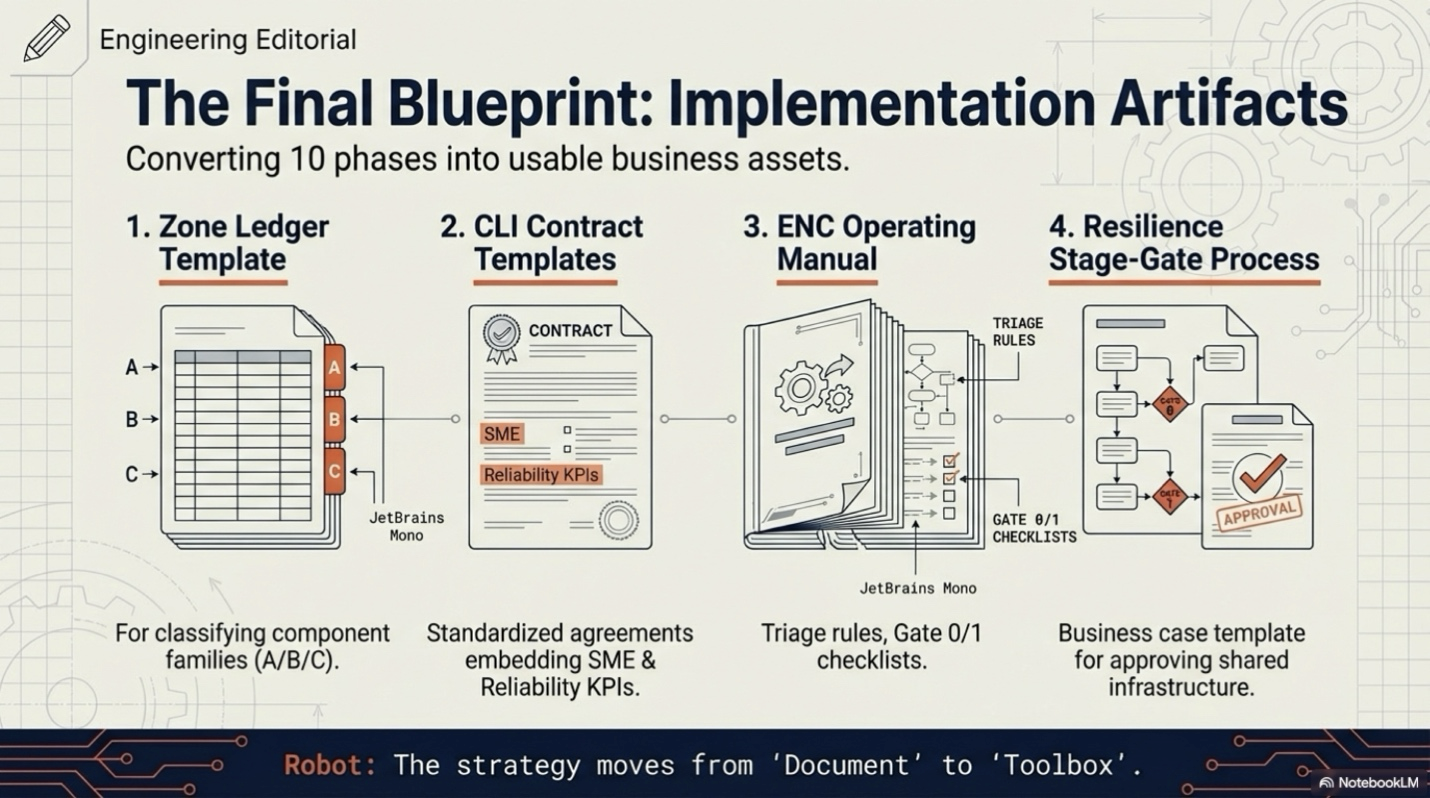
Instead of producing a static list of factories to build (which would have violated the province’s fiscal and mandate constraints), CRUCIBLE generated a system of governance and structural intervention designed to survive in a resource-constrained environment. The final output is not just a plan, but a self-correcting machine consisting of four interlocking modules: Zoned Value Chain Localisation (Z-VCL), Cluster Lead Integrators (CLIs), a lean Execution Nerve Centre (ENC), and a tiered Resilience Portfolio.
This report details exactly what was produced and provides an analytical breakdown of why this specific architecture met the rigorous demands of the original problem statement.
Other News
Readers Comment on The AI Economy
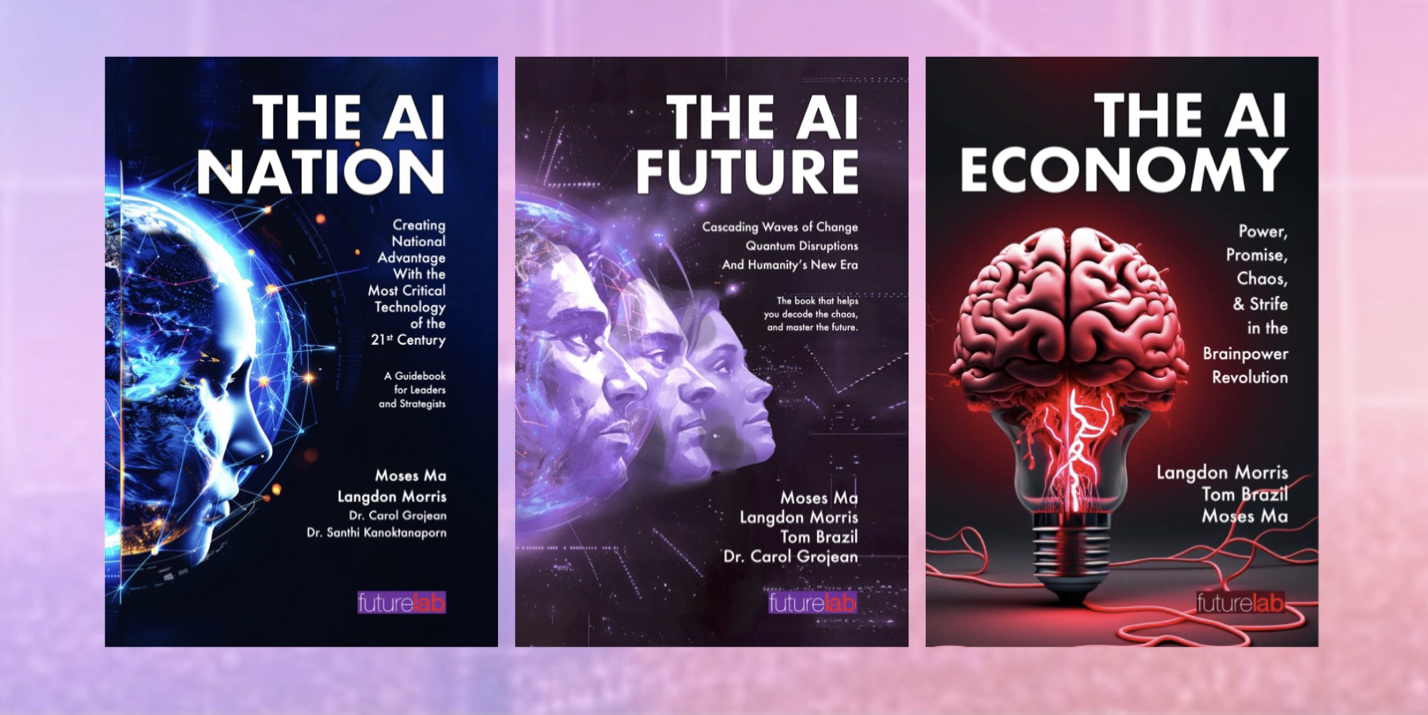
We’ve already received a lot of very positive comments about our most recent book, The AI Economy. Here are a few examples …
—
“The AI Economy captures AI’s dizzying velocity and its power to reorder value, jobs, and geopolitics. As a fellow futurist, I applaud this balanced guide to a revolution that will disrupt life as we know it while delivering extraordinary breakthroughs.”
Forbes Columnist Robert B. Tucker, USA
—
“The AI economy is an absolutely eye-opener of a read. Really incredible when one starts exploring the 4 scenarios generated – some serious food for thought for governments, businesses, academia and civil society. Would love to have you over to share the scenarios with some of our top corporate and gov. leaders.”
Grant Minnie, South Africa
—
“The AI Economy offers a clear and disciplined framework for understanding one of the most consequential economic transitions of our time. Rather than relying on point forecasts, the authors employ scenario thinking to explore how AI may reshape productivity, labor, capital, and institutional power. By linking technology with economic history and strategic decision-making, the book equips leaders with a practical way to navigate uncertainty. It is a timely and thoughtful guide for executives, policymakers, and strategists preparing for the decade ahead.”
K. V. V. S. Murthy, India
Plus, comments from recent keynote speeches
“The speech of Langdon Morris, the author of The AI Economy, stuck in my mind the most. His thesis is uncomfortable, but difficult to ignore: we have about 18 months left (!) to what we can call a "singularity" – the point at which AGI will start to accelerate its own development and the predictability of the system will drop sharply. However, it is not about the "when" itself, but about what to do about it. Morris is very clearly shifting the emphasis from fascination with technology to organizational preparation:
- variant analysis of scenarios (and not one "strategic plan"),
- rebuilding business models before they become outdated,
- resilience of supply chains and production cycles…”
Bartosz Usdrowski, Poland
—
“Incredibly convincing predictions by Langdon Morris on AI development.”
PUT Institute, Poland.
—
“Keynote from Monday: AI and the Future of Systems Engineering from Langdon Morris. The most provocative keynote speech at an INCOSE conference in a long time – it hit engineers right in the face and in the gut. Will I still be here, and what will I be doing after 2032? There is a lot of food for thought and has stimulated discussions on during the conference. Will it happen that way? Where does the energy and hardware come from? Who produces all these products and systems? What will humanity do from 2032 onwards? A REAL keynote!”
Sven-Olaf Schultze, Germany
—
“I wanted to thank you again for spending time with us, and for sharing your knowledge and thoughts on AI. It’s both exciting and scary to realize we are in the middle of another great revolution!”
Barry Nieuwenhuijs, the Netherlands
And Coming Soon
We’re about to release a new book about the very human process of solving complex problems. It’s called Brighter. Lead author Betty Dhamers, supported by Langdon Morris, Tom Kehner, and Jorge Bogumil, have created a clear roadmap through the critically important territory of helping groups of people work together effectively to solve large and difficult problems that inevitably involve multiple stakeholder groups, often with competing or conflicting agendas.